AI Agent Platforms With a Published Idle Scheduler Ranked by Documentation Depth and Storage Pricing
Ranking idle-agent schedulers by how well they document eviction, recovery and storage cost.
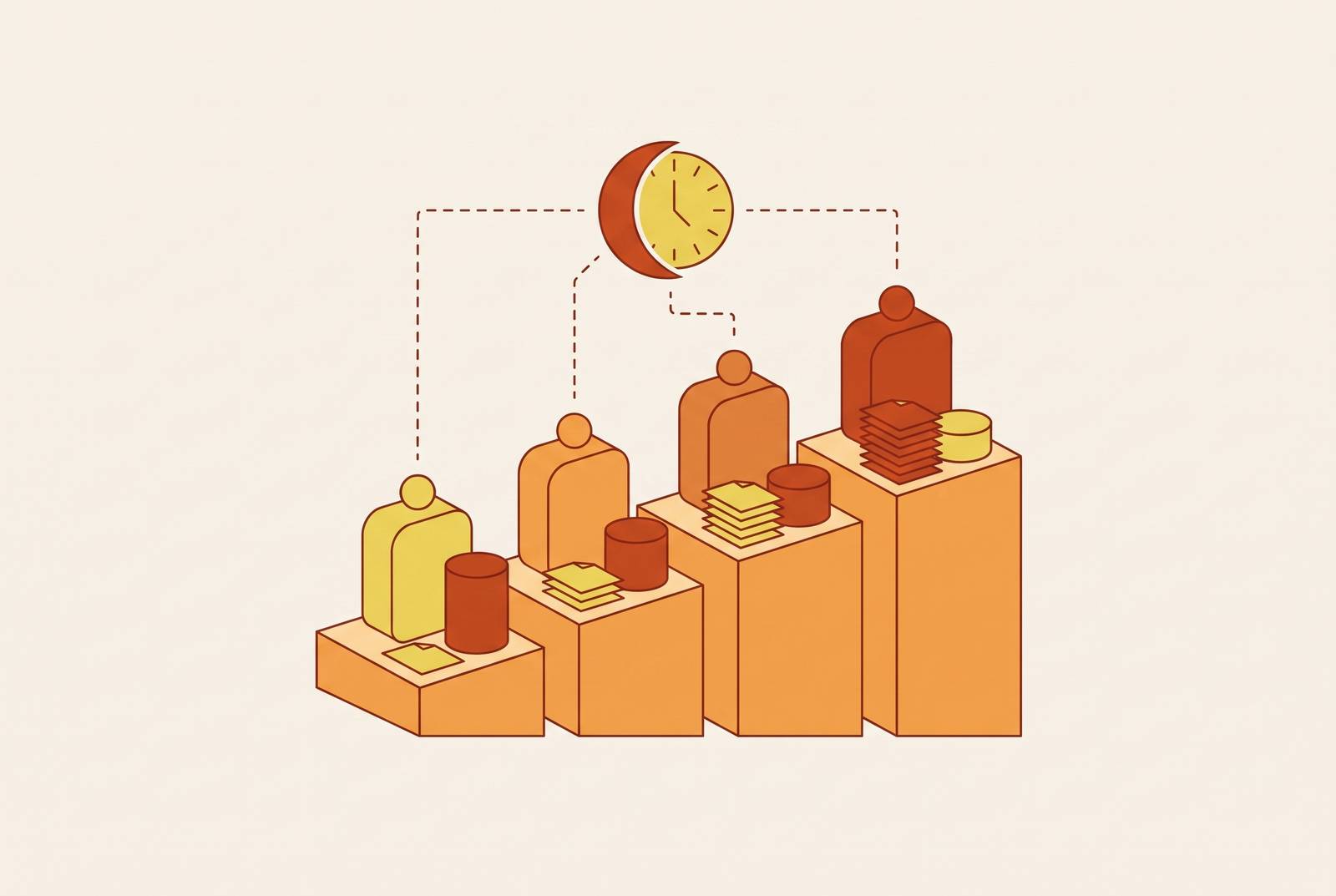
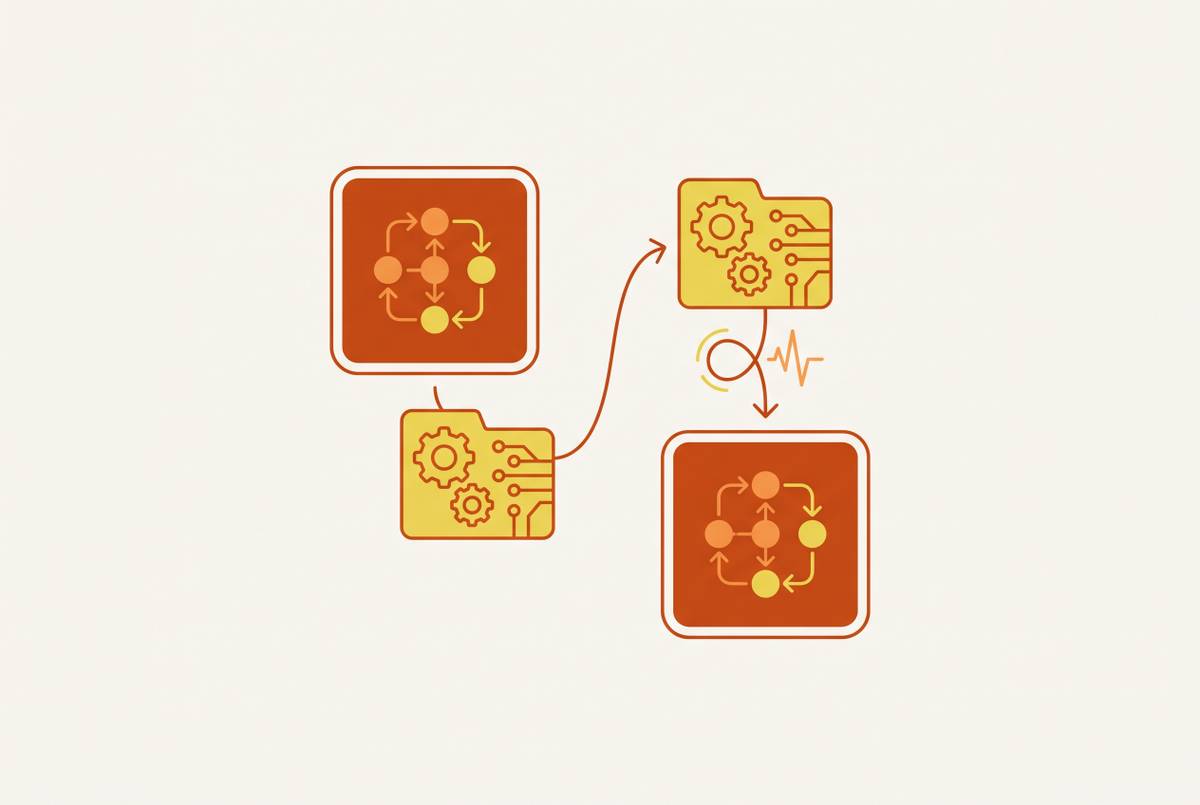
Snapshot-restore scheduling for idle AI agents should free up compute and keep the state they need to resume work, but a scheduled wake-up alone does not promise that. The idle-agent-scheduler prototype has the most thorough documentation in this comparison, while Cloudflare leads among hosted platforms. The useful test is whether the documentation connects eviction, recovery and idle-state cost.
Why idle time is not a solved problem for agent infrastructure
An agent session is a long-lived sequence of model calls interrupted by tool calls and waits for outside actions. Those pauses are not the end of the job. Conventional request-response infrastructure treats silence as “done,” while an agent often means “waiting.” A platform therefore needs a policy for what stays in memory during the gap and what can be moved elsewhere without losing the work.
Waiting can consume the same memory as working. Keeping every agent resident ties up application memory or GPU high-bandwidth memory, even when the agents have nothing to do. Without idle management, the hardware puts a limit on how many agents can stay available. This is also a separate problem from a full context window or a dead process, so solving either of those does not automatically release compute during a wait.
What "published idle scheduler" means and why it is a useful filter
Useful documentation explains what triggers eviction, which state survives, how recovery works and where latency comes from. It also describes pressure and failure, including what happens when the backing store is slow or full. An announcement that agents can wake on a schedule does not meet that standard by itself.
A scheduler trades recovery speed against memory density and state fidelity, and developers should be able to see those trade-offs before they deploy it. Otherwise, the developer learns about those limits when something goes wrong. Missing documentation leaves the buyer without a promise of how a system will work.
This comparison ranks how much the documentation explains and how clear the storage pricing is, without judging raw performance or overall product quality. The designs operate at different layers, including application state, inference memory, SDK scheduling and the runtime itself. A research system can explain its algorithm in full without offering a hosted service. Conversely, a shipped API can be convenient while leaving recovery behavior and idle cost unspecified.
Application-level freeze/thaw: the idle-agent-scheduler prototype
The idle-agent-scheduler documentation makes its policy directly inspectable. This single-machine, pure-stdlib prototype uses a monotonic clock to track each agent’s last_seen. Its tick() function freezes agents that have been silent longer than idle_timeout_s and saves their state to one atomic JSON file with a temporary write followed by os.replace. It then releases the resident memory slot. A later submit(agent_id) reads the file and reports thaw latency.
Memory pressure has a named response too. The evict_lru() function freezes the least-recently-active agents when the resident count is greater than max_resident. The readme also says what comes first, putting no silent state loss ahead of sub-second recovery, density and generality. Corruption fails loudly, and the documentation names risks that can follow, such as over-provisioning and starving deliberate agents.
The project’s own simulation reports sub-second average thaw latency across a 50-request burst against 200 agents, with maximum latency well under a second. The reported setup was Windows 10, Python 3.12 and a SATA SSD, as of 2026-10-11. A 1 MB payload also thawed in under one second. The documentation warns that HDDs and network drives degrade recovery latency.
Only JSON-serializable payloads can freeze, while open sockets, GPUs and locks require an application-level drain first. The prototype’s candid distinction between restoring JSON and a full cold start with library re-imports and context-window re-warming gives it the highest documentation-depth ranking here. There is no hosted storage price because there is no hosted offering, so the operator pays for the disk and owns the eviction policy.
Inference-engine tier placement: MORI's idleness-as-spectrum approach
MORI’s June 2026 paper starts from a different premise. Idleness is a continuous, relative spectrum. On each scheduler tick, the system ranks active programs by their current idleness, keeping busier programs in GPU HBM and shifting more idle ones toward CPU DRAM. The partition moves with hardware capacity. Slower tiers are a stated generalization beyond the core two-tier design.
Programs stay where they are until their relative idleness crosses the partition boundary, which reduces transfer churn. Admission control works at each memory tier, so an application’s eviction code does not have to handle all the capacity pressure on its own. This makes the hardware layout central to the scheduler. It is easier to reason about on a known GPU cluster than in a multi-tenant cloud whose topology is hidden.
The paper offers high academic rigor and lacks the prototype’s explicit failure-mode section and comparison of rejected alternatives, so a developer cannot read it and know what happens when CPU DRAM fills. There is no hosted storage tariff to compare either. Idle state stays in memory, so its cost comes from compute resources. Offloading the inference cache is not the same thing as putting an agent to sleep.
Its schedules use cron syntax and a default prompt, while ifIdle: { behavior: "wake" } wakes an idle thread and invokes a run when a scheduled signal arrives. The option connects cron-triggered runs with event-driven invocations. That is meaningfully more developed than a cron job the developer wires up alone. It exposes a named policy at the API surface.
The remaining uncertainty is below that API surface. Storage pricing is not surfaced there either. Developers control the cron expression, but the platform controls wake behavior that the documentation does not fully specify. The resulting verdict is a documented SDK feature with operational gaps.
Platform-integrated scheduling: Cloudflare's Durable Object alarm model
Cloudflare Agents’ documentation as of October 29, 2026 places scheduling inside the Durable Object runtime. Each agent has a durable identity, local SQL storage and a Scheduler capability. State and wake-up behavior share a home. That integration produces the most complete documentation among the hosted platforms in this comparison.
The Agents SDK Lifecycle handles Durable Object alarms and WebSocket events within the object. The Pi harness uses the Lifecycle’s job queue to schedule future work, allowing a run to continue after object eviction. Its documentation explicitly addresses that recovery path. Eviction is an expected runtime event. Alarm semantics, persistence and recovery consequently appear in the core runtime documentation.
Idle state lives in local SQL storage billed under the Durable Object pricing model, and the documentation provides a path from scheduler behavior to storage pricing. That earns Cloudflare the strongest hosted ranking for documentation depth and pricing coherence. It does not establish that it is the cheapest option, since the comparison supplies no storage rates.
The runtime also imposes real constraints on workloads. Single-region persistence and a JavaScript/WASM execution environment are not interchangeable with a general-purpose computer. Cloudflare’s global deployment model does not erase those limits. Its advantage here is that the runtime, state store and scheduler form a documented cost model.
Beta-stage scheduling: OpenAI Agents API scheduled automations
The OpenAI Agents API scheduled automations guide, as of October 26, 2026, is especially clear about session boundaries. Periodic automations use a five-field cron expression and a named timezone, while one-time automations use a future Unix timestamp. Those schedule types are mutually exclusive. The target decision is separately documented. A new-session target starts a fresh conversation with fresh agent configuration, while an existing-session target delivers an automation notification into an existing session.
The guide gives that decision a practical rule. Independent work belongs in a new session, while follow-up work that needs prior findings belongs in an existing one. The documentation also separates delivery from execution. An invocation marked completed means delivery to the session, so invocation status cannot serve as a task-completion monitor.
The operational specification is much thinner than the session guidance. The documentation leaves retries, overlap, catch-up behavior and limits unspecified, including failed delivery, a periodic firing while an earlier invocation remains queued, and resumption of a paused schedule. Developers must design as if those edge cases are not handled. The feature is in beta, with no launch date in the documentation described here. The openai-node repository documents the automation and invocation client methods, but method coverage does not fill those behavioral gaps.
Storage pricing is also absent from the scheduling documentation. That omission is especially relevant for existing-session targets, which accumulate state across scheduled runs.
What the documentation gaps reveal about storage pricing coherence
The clearest cost models appear where the state boundary is explicit. A JSON file, an allocation of CPU DRAM and a Durable Object’s SQL storage are different things to retain and bill. Calling all three “idle storage” hides those differences. Where the scheduler sits determines which resource stays in use during a wait, so judging storage pricing requires knowing how the scheduler works.
When the documentation explains eviction and recovery, it shows what must survive and makes the cost easier to trace. By contrast, a wake option without a persistence explanation leaves a missing link between the API and the bill. Neither gives a developer enough information to work out what a week of idle time costs.
This is a ranking of legibility. The prototype leads on transparency, Cloudflare leads among hosted platforms, and MORI provides a rigorous research account of a different resource problem. Mastra and OpenAI expose useful scheduling controls without the same operational completeness. None of those distinctions justifies treating a scheduled trigger as proof that compute charges stop during every idle window.
How to use documentation depth and storage pricing as a pre-commitment checklist
Before committing, developers should apply three tests to the documentation rather than infer readiness from a scheduling feature name.
First, find the eviction policy by name and the conditions that trigger it.
Second, find a measured or specified recovery latency and the conditions under which it degrades.
Third, trace idle-state cost from the scheduler documentation to storage pricing, or to what the operator pays for disk where there is no hosted service.
Passing those tests earns a platform evaluation on feature completeness. Failing one or more means treating it as infrastructure-in-progress rather than assuming undocumented behavior will work in production. The tests also force the state-fidelity question into the open. A recovery path that reconstructs application data may be sufficient for one agent and fundamentally wrong for another.
For agents that must resume live processes on persistent desktops, the appropriate unit is a machine per agent. Windows-only desktop apps, Citrix environments and phone-only apps need more than JSON deserialization or a Durable Object identity. Those workloads call for a persistent, resumable computer with snapshot-and-restore semantics, priced by actual use with no charge during sleep. Firecracker micro-VMs can pause and restore in milliseconds, but that mechanism is distinct from the schedulers compared here.