AI Infrastructure Tools That Automate Agent Suspend and Resume Compared on Idle Cost
Snapshot-restore tools cut idle agent costs, but not to zero.

Snapshot-restore scheduling cuts compute costs for idle AI agents by freeing workers while the agents wait and restoring saved state when work returns. This comparison turns on what stays reserved and what restoration costs in time and money. Durable execution engines preserve workflow progress, while microVM snapshots preserve the execution environment. Neither makes the whole service free, so the right choice depends on what the agent must retain.
Why idle time is the dominant cost variable in agent infrastructure
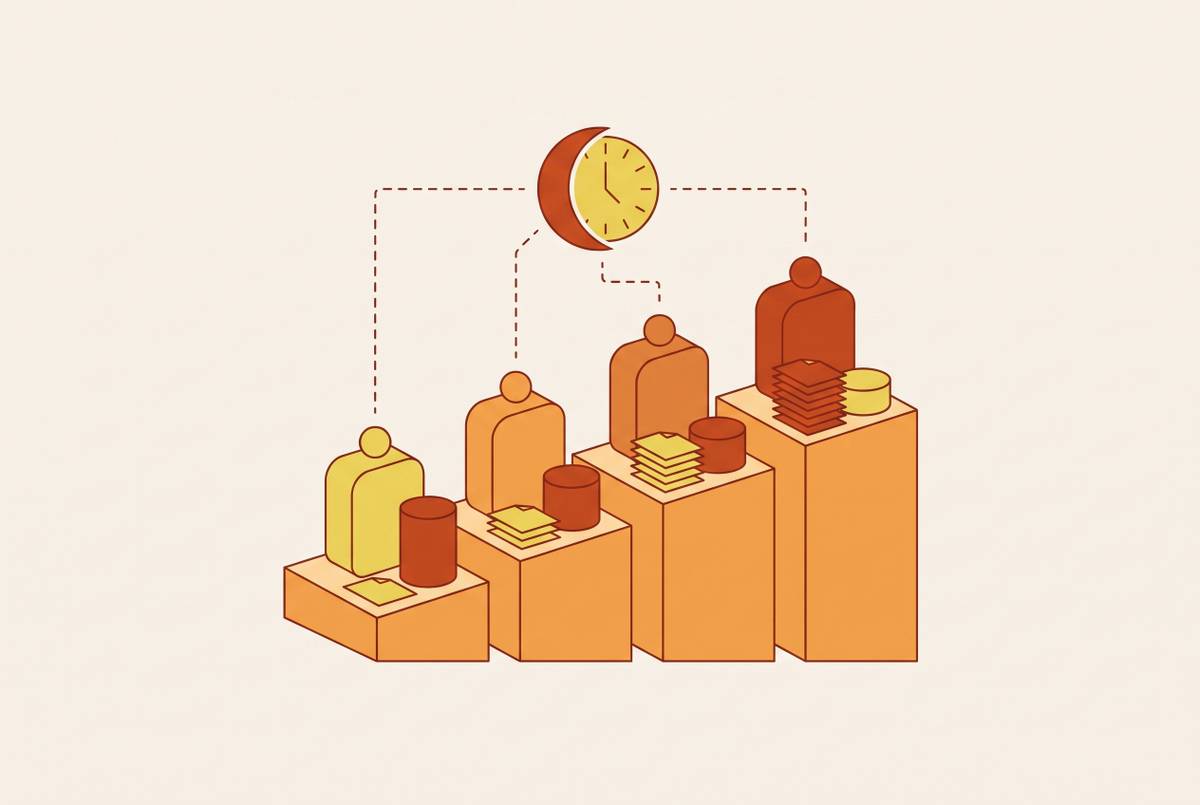
A task arrives, the agent calls tools, and a result appears. The invoice covers the parts the clip skips. Those include tool call latency, human approval gates, polling loops for asynchronous results, and retry backoffs. For most agent workloads, it costs more to keep infrastructure in place through those waits than to run the work itself.
That waiting is part of the job. An approval gate can remain open for hours or days, while a polling loop can keep checking a CI pipeline or deployment whose answer is still “not ready.” If the execution environment stays live throughout, the bill covers the whole session, including the time spent waiting. That cost of waiting can make a service expensive even when its model calls are cheap. Infrastructure choice is a first-order cost decision.
How do you stop paying for compute while an agent waits?
The answer starts with what remains reserved during the wait. The three models are live process, cold restart, and snapshot/resume. They do not merely offer different prices for the same behavior. Each keeps a different amount of the agent’s environment ready, so what it costs while idle depends on how much work is left to do on resume.
A live process keeps the execution environment fully allocated for the customer session, including memory, loaded packages, open connections, and the working directory. The bill keeps growing whether the agent works or waits. It is equivalent to dedicating a running server to every waiting session. There is no restore overhead because nothing was released. That can be reasonable for short sessions with a high active-to-idle ratio, but the economics turn quickly as waits lengthen.
Cold restart tears down the environment when it has no work to do. On the next turn, the process, packages, and context must be rebuilt from scratch. Idle compute drops to zero, but every return to work incurs that rebuilding delay. Google’s Agent Compute Engine announcement identifies this latency as a problem the service was designed to avoid. Cold restart works for truly stateless sessions if the user can wait for them to start again.
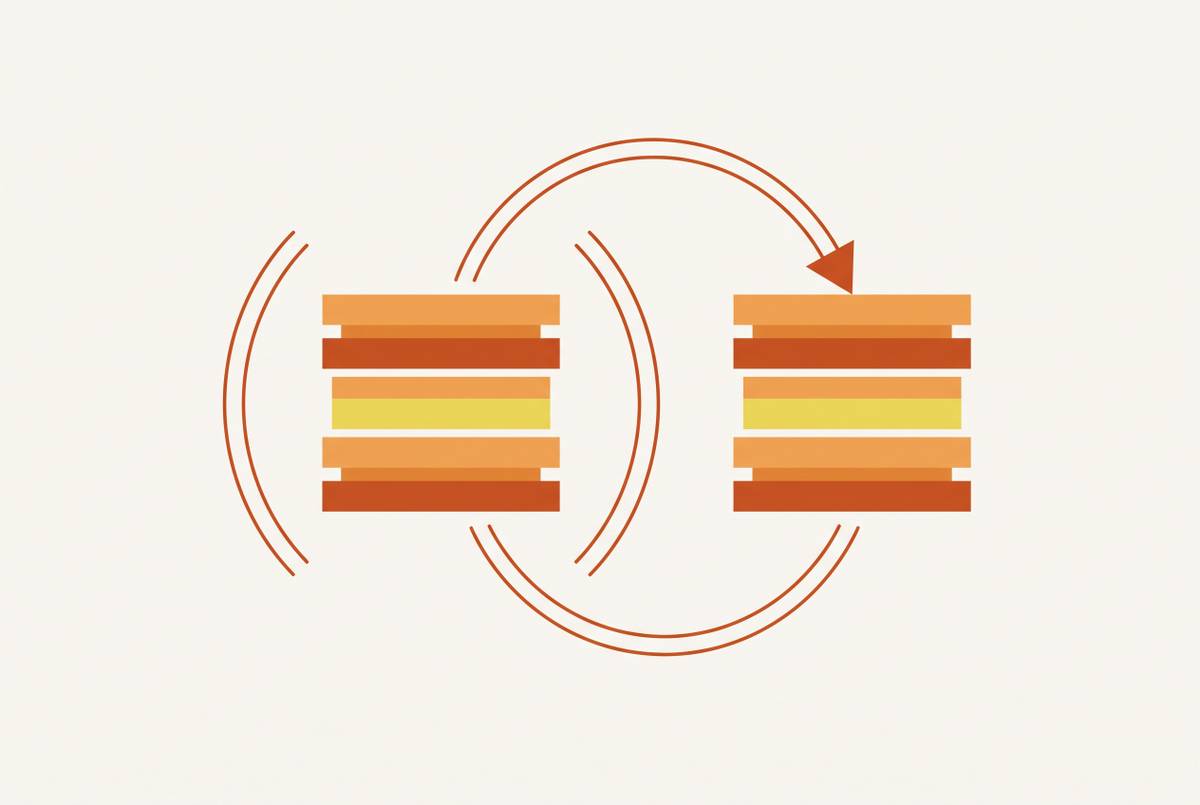
MicroVM snapshot/resume instead serializes memory and filesystem state to durable storage and releases compute. When work returns, the saved state is restored onto an available worker, allowing execution to continue from the point where it stopped. The environment survives without remaining live on a worker. Storage must retain the snapshot for the whole idle period, and restoring it still has a cost.
How durable execution engines implement the snapshot/resume model
Durable execution engines keep track of progress in a journal. The journal records the inputs and outputs of workflow steps, including LLM calls, tool invocations, and external API requests. A result is persisted when it returns, before the calling code uses it. That ordering makes completed work recoverable across interruptions. It does not preserve every detail of a running process.
On resume, deterministic replay reconstructs workflow state from that journal. Steps that the journal records as complete are skipped. In the waitForEvent pattern, the harness suspends the workflow at a wait point and restores it when a tool response, human approval, or timer signal arrives. No workflow compute is consumed during that wait. The stored history provides the continuity that a live process would otherwise supply.
This is separate from evaluation and observability. Evaluation asks whether the agent gave a good answer, while durable execution helps the steps it chose finish even when infrastructure interruptions get in the way. Distributed systems have long had to deal with work that is only partly done, duplicate side effects, and state lost across process boundaries. Agents do not make those problems new. The journal gives the workflow a way to recover, but external actions still need safeguards if their results have yet to be recorded.
By late 2026, several platforms operate at this layer. Temporal has Generally Available integrations with the OpenAI Agents SDK as of March 23, 2026. Inngest provides event-driven durable functions and raised a Series A led by Altimeter in September 2025. Restate has a journal-based, single-binary design and was built by four co-founders, including some of the original creators of Apache Flink. DBOS uses durable execution backed by a relational database and has a partnership with Databricks from April 2026 and a U.S. patent granted in August 2026.
Cloud providers offer this model as well. AWS Lambda Durable Execution SDK entered developer preview for Java in February 2026 and reached General Availability for.NET on July 23, 2026. It supports suspending a workflow for up to a year with zero idle compute cost. Azure Durable Task Scheduler reached consumption-based, pay-per-use pricing in March 2026 for bursty, idle-heavy workloads. Cloudflare Workflows reached general availability on April 7, 2025, treating waiting as a continuation.
How microVM-based infrastructure platforms implement suspend/resume at the compute layer
MicroVM suspension moves below the workflow into the execution environment. Instead of reconstructing progress from recorded steps, it preserves memory, filesystem state, and running processes. In the Firecracker snapshot mechanism, a sandbox pauses and its guest memory and device state are frozen to disk. Compute billing stops during suspension. Restoring that state into a new microVM lets the agent continue without rebuilding its environment, with resumes possible in milliseconds.
That boundary also changes isolation. Containers share the host operating system kernel, while microVMs run their own kernels. The latter provides a stronger isolation boundary for agents executing AI-generated code or handling untrusted inputs. Traditional VMs also provide separate environments, but take longer to boot and need more resources to initialize. MicroVMs reduce that overhead without reducing the environment to a workflow journal.
AWS Lambda MicroVMs, announced June 22, 2026, gives each user or agent session its own Firecracker microVM starting from a snapshot. In the SUSPENDED state, it charges for snapshot storage but not compute. Traffic resumes the VM if autoResumeEnabled is set. Sessions persist for a limited duration, so this is not indefinite retention.
Microsoft Foundry hosted agents provides a filesystem-persist, scale-to-zero pattern. The service suspends between turns and scales back up on the next request, with files, disk state, and session identity persisting. Its stated promise is no payment while the agent is idle. That is a narrower preservation claim than an entire memory snapshot. Filesystem continuity and exact process-state continuity should not be treated as interchangeable when comparing platforms.
The costs that suspension does not eliminate and the worksheet a developer actually needs
A complete comparison includes snapshot storage, resume overhead, warm worker capacity, billing granularity floors, and the control plane’s own charges. Some costs remain during the wait, while others arrive when work resumes. Leaving either group out makes suspension look cheaper than the full service actually is. The purpose of counting them is an honest comparison.
Storage is the most direct replacement for idle compute. Every microVM snapshot takes up disk space for as long as the agent needs to keep its working state. Google’s announcement warns that the fees to store thousands of persistent environments can cost as much as leaving compute running. A workflow journal has a different storage burden because it retains step history. The calculation needs to include how much state is kept and how long it is kept.
Shared workers also complicate cost attribution. Tag-based FinOps tooling assumes a stable mapping between a container group and a team, but suspended agents can resume onto whichever worker is free. That stable mapping is gone. A pool may make good use of capacity while making it harder to tell how much each team should pay. The worksheet needs to distinguish the shared worker bill from the storage and execution costs associated with each workload.
For a developer building that worksheet, the starting question is how many agents retain state across more than a few minutes of idle time. Google’s announcement identifies that count as the diagnostic for whether suspension earns its operational complexity. The worksheet should then capture active-to-idle ratio, session duration, retained state, storage charges, resume latency and cost, warm capacity, billing floors, and control-plane charges. Those entries should be compared with what a live-process or cold-restart setup would cost for the same workload. The deliverable is a workload-specific comparison.
The operational risks that survive a correct cost calculation
The most important remaining problem is idempotency. A pause can land after an API action but before its confirmation, leaving the agent unsure whether the action completed. A payment may have been sent even though its result was not recorded. On waking, the agent may retry it. Every external action must therefore be safe to repeat, and much agent code is not written that way.
Once the harness has persisted a result, replay can use it without repeating the completed action. But the journal cannot settle an outcome it never recorded, and direct HTTP calls outside the harness remain vulnerable. The engineering requirement is to make those actions safe to repeat and keep the harness’s coverage explicit.
Environments that stay around for a long time can also drift. Files, dependencies, and software versions can change over weeks, moving the environment away from its original configuration. That makes bugs harder to reproduce and environments harder to audit. The mitigation is to set expiry policies and periodically rebuild from fresh base images. Preserving state indefinitely is not the same as preserving a known configuration.
Portability also needs an explicit decision. Services such as Agent Compute Engine are closely integrated with a single cloud, so moving workloads or spanning providers carries the engineering cost of reworking identity and state management. Diagnosing failures that appear after resume requires inspecting suspended environments, and tooling for that work is still relatively immature.
How to match the right suspension model to a given agent workload
Three workload properties determine the choice. They are the active-to-idle ratio, session duration, and the state the agent must preserve. Cold restart or containers are enough for stateless sessions that are short and spend most of their time doing work. Suspension overhead can exceed the saving, while a live process remains affordable because the waits are brief. There is little economic reason to preserve a complex environment that the next turn does not need.
Long, mostly idle sessions with workflow-only state favor durable execution. Temporal, Inngest, Lambda Durable Execution, the Azure scheduler, and Cloudflare Workflows fit this pattern. They can release workflow compute during waits while retaining a journal with low storage overhead relative to a full environment snapshot. The key condition is that replayed workflow progress is enough. The agent does not need to wake inside the exact process it left.
Long, mostly idle sessions that need the full environment favor microVM snapshot/resume. Computer-use agents in legacy desktop apps, signed-in browser workflows, and agents holding open tool connections need more than a workflow log. AWS AgentCore has provided per-session microVMs since 2025, with CPU billing stopping during waits, while Lambda MicroVMs offers storage-only billing in its SUSPENDED state. Foundry covers the filesystem-persist pattern within Azure. These choices preserve different state, so their guarantees must match the session’s requirements.
What must survive the pause determines the suspension model. If that includes opened files, loaded packages, authenticated sessions, or in-progress GUI interactions as exact process state, a durable execution layer alone is insufficient. Windows-only desktop apps, Citrix environments, and phone-only apps need a full-OS environment beyond what a Linux process sandbox can provide. For those workloads, the choice is limited to platforms that have snapshot/resume and the Linux, Windows, or Android execution environment the workload needs.